In Dubai, the pulse of the night doesn’t just come from bass-heavy beats-it comes from bodies moving as one, sweat-drenched and smiling, lost in the rhythm under neon lights. This isn’t just another city with clubs; it’s a place where the dance floor is sacred ground, where strangers become dance partners by midnight, and where the energy doesn’t fade until the sun rises over the Palm. If you’ve ever wondered where the most electric dance floors in Dubai are, you’re not alone. Locals, expats, and visitors alike are hunting for spots where the crowd doesn’t just show up-they ignite.
Marina Beach Club: Where the Desert Meets the Sea
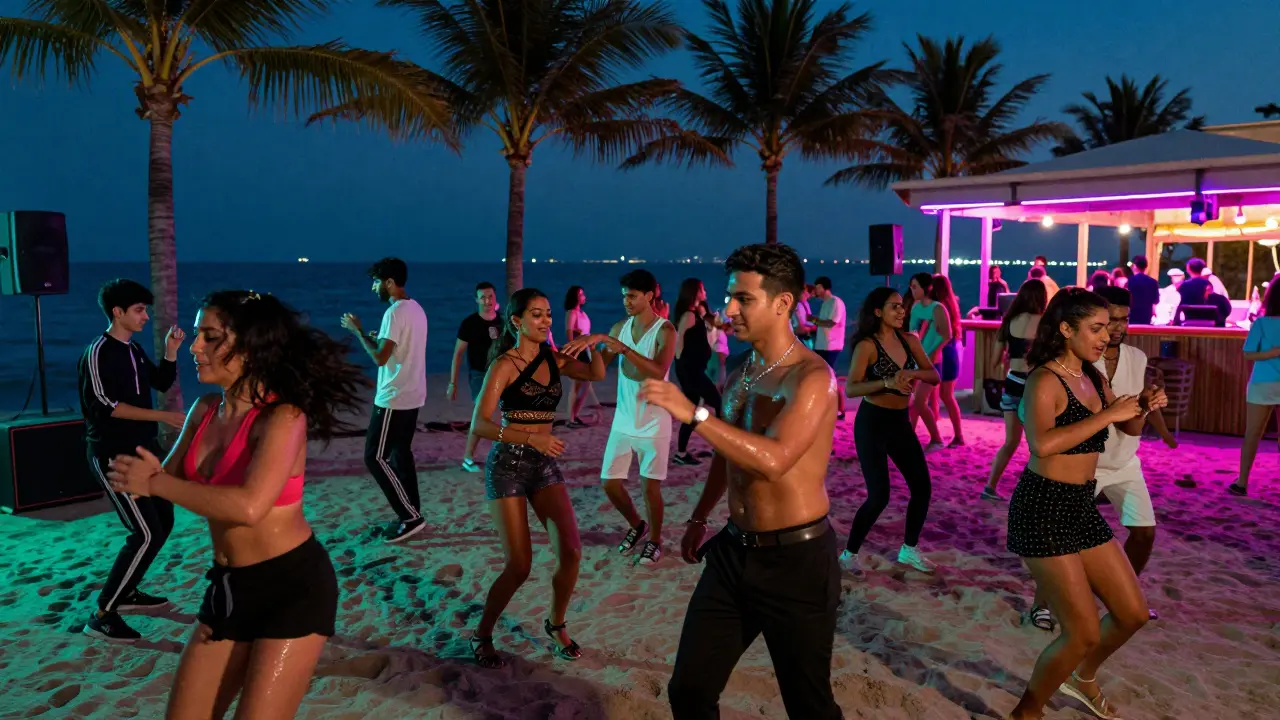
Marina Beach Club isn’t just a beach club-it’s a dance phenomenon. Open until 4 a.m. on weekends, its open-air layout turns the Persian Gulf into a backdrop for a sea of moving bodies. The floor here isn’t just crowded; it’s alive. You’ll see Emirati teens in designer tracksuits locking into viral TikTok moves, Russian expats spinning with precision, and Indian professionals letting go after a long week in the office. The sound system, imported from Germany, hits low-end frequencies so hard you feel them in your ribs. DJs rotate weekly, but the house favorite is DJ Khaled’s ‘We Got It’ remix, which triggers a synchronized jump every Friday night. Don’t expect quiet corners here. The energy is relentless, and the crowd doesn’t wait for permission to dance-they just start.
White Dubai: The Glass Palace of Movement
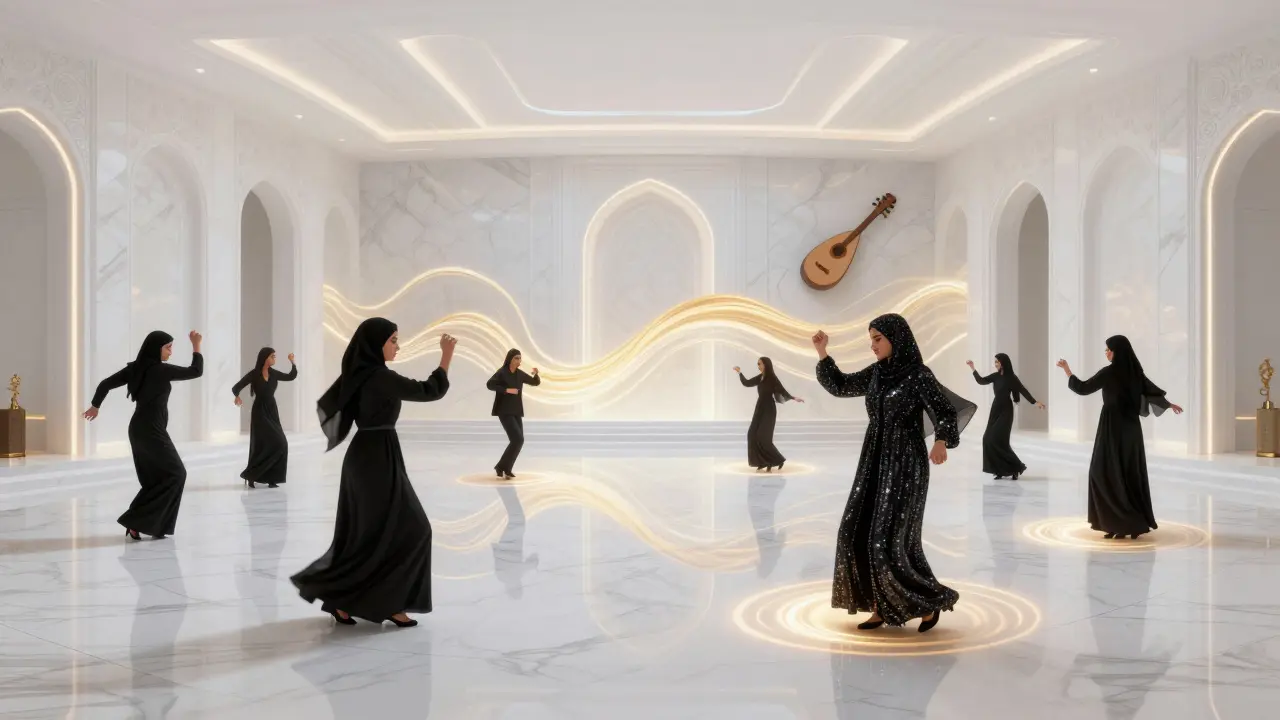
White Dubai, tucked inside the Dubai Mall complex, feels like stepping into a futuristic cathedral of rhythm. The entire venue is clad in white marble and LED panels that shift color with the beat. What sets this place apart isn’t the luxury-it’s the crowd. This is where the city’s elite go to dance, not to be seen, but to lose themselves. On Saturday nights, the floor fills with Emirati families who’ve swapped their kanduras for sleek black outfits, and South Asian couples who’ve flown in from Sharjah just to dance. The DJ doesn’t play mainstream hits-he plays deep house mixed with traditional Oud samples, creating a sound that’s uniquely Dubai. The result? A dance floor where traditional and modern collide without friction. You’ll see someone doing the dab next to a woman twirling in a sequined abaya. No one blinks. That’s the magic here.
Level 43: The Sky-High Rave
If you want to dance 43 stories above Dubai’s skyline, Level 43 is your only real option. Located atop the Address Downtown, this club doesn’t just have a view-it has a gravitational pull. The dance floor is built on a glass platform that lets you see the Burj Khalifa glittering below. The crowd? Mostly expat professionals in their late 20s to early 40s who’ve traded their suits for leather jackets and sneakers. The music? Hard-hitting techno with Arabic vocal chops layered in. It’s not unusual to hear a remix of ‘Habibi I Love You’ mixed with a hard bassline. What makes this floor special isn’t the height-it’s the focus. People here don’t take selfies. They don’t stand around with drinks. They dance. From 11 p.m. to 3 a.m., the floor is packed shoulder-to-shoulder, every movement synced to the beat. One regular told me, ‘I come here to forget I work in finance. The music doesn’t care about your job title.’
Zero Gravity: The Underground Pulse
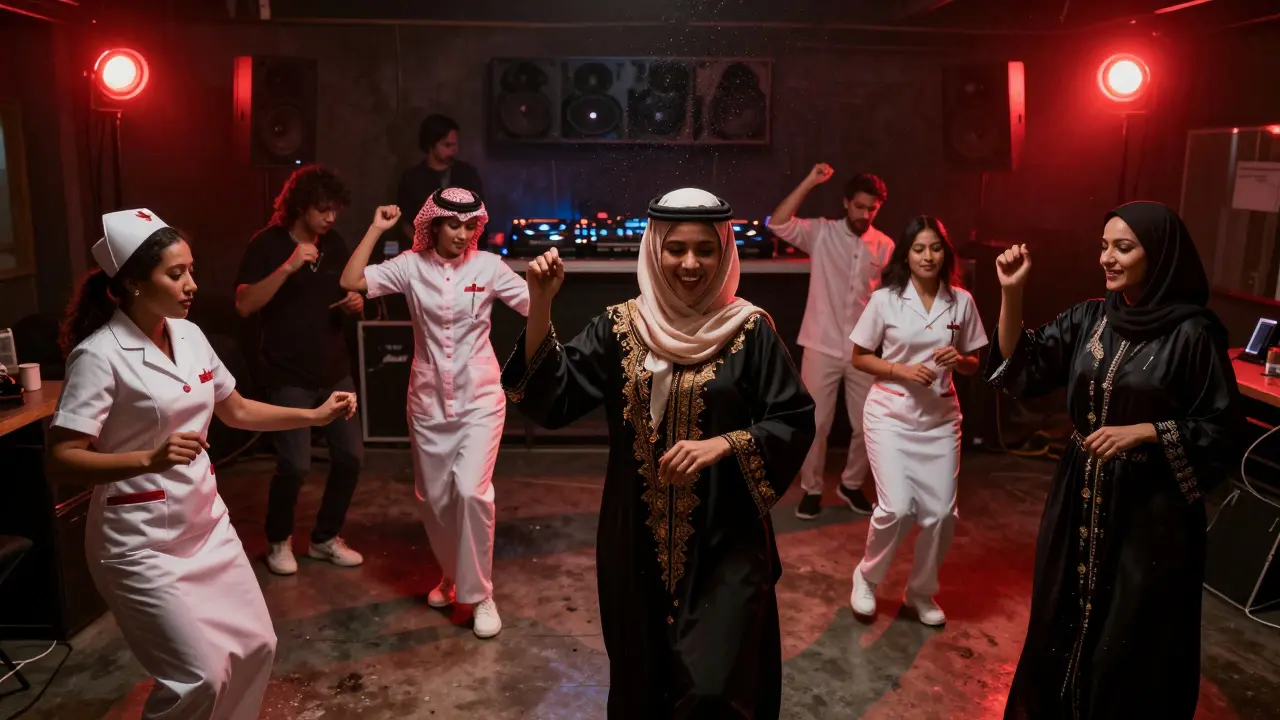
Don’t let the name fool you. Zero Gravity, hidden behind a nondescript door in Al Quoz, is where Dubai’s most passionate dancers gather. No VIP tables. No dress code. No bouncers checking IDs beyond 18. Just a dimly lit warehouse, a 12-speaker sound system, and a crowd that shows up because they love to move. The DJs here are local legends-artists like Nada and Rami who blend Emirati folk rhythms with techno. On Friday nights, the floor becomes a living archive of dance styles: hip-hop, Bollywood, waacking, even traditional Khaleeji footwork. It’s not glamorous, but it’s real. You’ll find Emirati women in hijabs dancing with expat DJs, Emirati men in sneakers breaking into freestyle, and a group of Filipino nurses who come every week after their night shifts. This is where dance isn’t entertainment-it’s therapy.
Opium: The Luxury That Moves
Opium, in the heart of DIFC, is where Dubai’s high-end meets high-energy. The club’s interior is all velvet, gold trim, and candlelit booths-but the dance floor? Pure chaos in the best way. The crowd here is a mix of Saudi royals, Russian oligarchs, and local entrepreneurs who’ve just closed a deal. The music? A curated blend of Afrobeat, Arabic pop, and French house. What makes this floor unique is its rhythm. Unlike other clubs where the beat drops and everyone freezes to take a photo, here, the moment the bass hits, the entire floor erupts. No one waits. No one holds back. It’s not uncommon to see a woman in a diamond-embroidered dress doing a full-body wave while her partner spins her under a strobe light. The staff don’t clear the floor for VIPs-they clear space for the dance.
Why Dubai’s Dance Floors Feel Different
Dubai’s dance floors aren’t just loud-they’re layered. In other cities, clubs are about drinking, posing, or networking. Here, they’re about release. After decades of strict social norms, the city’s youth-Emirati and expat alike-have reclaimed the night as a space for freedom. The government’s push for cultural openness, combined with the city’s melting-pot population, has created something rare: a place where dance isn’t just accepted, it’s expected. You won’t find a single club in Dubai where the floor is empty before midnight. People come here not to watch, but to become part of the rhythm.
What to Wear, When to Go, and What to Avoid
Forget jeans and sneakers. Dubai’s top dance clubs have dress codes that are strict but fair. At White Dubai and Opium, men need collared shirts and dress shoes. Women should avoid overly revealing outfits-modesty is still valued, even on the dance floor. At Marina Beach Club and Level 43, smart casual works. Zero Gravity? Anything goes, as long as you’re not wearing flip-flops. Show up before 11 p.m. if you want to dance without sweating through your shirt. After midnight, the crowd thickens, and the heat rises. Avoid bringing large groups-clubs cap entry at 6 people per table. And never, ever try to bring outside alcohol. Security checks are random but thorough.
Where the Music Comes From
Dubai’s dance floors don’t play random hits. They play stories. Local DJs sample traditional Emirati music-like the rhythmic beats of the Yowlah drum-and fuse them with global genres. You’ll hear a remix of a Bedouin chant under a deep house drop. You’ll hear an Arabic love ballad turned into a trance anthem. This isn’t just trend-chasing-it’s cultural pride. The city’s music scene is now one of the fastest-growing in the Middle East, with studios in Al Barsha and Dubai Studio City producing tracks that chart across Europe and Asia. The dance floor is where these stories come alive.
Final Tip: Let Go
The best thing you can do in any Dubai dance club is stop thinking. Don’t worry about how you look. Don’t check your phone. Don’t wait for someone to join you. The floor doesn’t care who you are. It only cares that you move. In a city that’s always building, always changing, always pushing forward, the dance floor is one of the few places where time stops. And in Dubai, that’s worth showing up for.
What’s the best night to dance in Dubai?
Friday and Saturday nights are the most electric, with the biggest crowds and the best DJs. Friday starts early-around 10 p.m.-because many locals finish evening prayers and family dinners by then. Saturday is when the expat crowd hits full force. If you want a slightly quieter vibe, try Thursday nights at Zero Gravity or Level 43.
Are there any clubs in Dubai that are family-friendly for dancing?
Most clubs in Dubai are 21+ and adult-focused. However, some venues like Marina Beach Club host daytime beach parties on weekends with music that’s safe for teens and families. These events usually end by 8 p.m. and feature live bands or acoustic sets. For true dance-floor energy, stick to evening hours after 10 p.m.
Can tourists dance in Dubai clubs without any issues?
Absolutely. Tourists are welcome and often encouraged. Dubai’s nightlife is built for international visitors. As long as you follow the dress code, don’t cause disturbances, and respect local norms-like avoiding public displays of affection-you’ll be fine. Security is strict but fair. No one will hassle you for dancing, as long as you’re not drunk or aggressive.
Do I need to book a table to get in?
At top clubs like White Dubai, Opium, and Level 43, booking a table guarantees entry and avoids long lines. But you don’t need one to dance. Walk-ins are welcome, especially before 11 p.m. At Zero Gravity, you can just show up-no reservation needed. If you’re going with a group of 4 or more, booking ahead saves time and ensures you get in.
Is there a difference between dance floors in Dubai and other global cities?
Yes. In cities like Berlin or Ibiza, dance floors are often about anonymity and long nights. In Dubai, the floor is a cultural melting pot. You’ll see people from over 200 nationalities dancing together, often blending their own styles. The energy is more intentional-people come to celebrate, not just escape. And unlike places where dance is niche, here, dancing is a universal language spoken by everyone from Emirati teens to retired British expats.
Next Steps: Where to Go After the Dance
When the music ends and the lights come up, the night isn’t over. Head to Alserkal Avenue for artisanal coffee and live jazz at 4 a.m. Or grab a shawarma from the 24-hour spot near Dubai Mall and walk off the energy under the city’s glowing skyline. Some dancers even head to the beach at Jumeirah Beach Residence to watch the sunrise. In Dubai, the dance floor is just the beginning.